The Performance Equation
The Leadership Transition Environment
How We Work
Development Pathways
Leaders typically engage through one of two pathways.
Leadership Cohort Programs
Format: 12 team sessions, organized in a repeating rhythm: two weekly team sessions followed by one week of individual coaching, where each team member participates in a 1:1 session providing an opportunity to apply the work to their specific role, challenges, and development goals.
The focus remains on real situations, not theory.
But in a cohort format, you are not only learning from your own experience. You are also seeing how other thoughtful people interpret, navigate, and respond to similar challenges.
As you listen to how others think through situations, where they get stuck, what they notice, and how they respond under pressure, your own perspective begins to expand.
You start to recognize patterns that are harder to see when you are focused only on your own situation.
Groups are intentionally kept small — with enough diversity of experience to broaden perspective, while still allowing space for honest, in-depth conversation.
Over time, something important happens. You begin to realize that many of the challenges you are facing are not unique to you. That recognition matters. It reduces some of the pressure people carry, creates greater clarity, and makes it easier to think well in difficult moments.
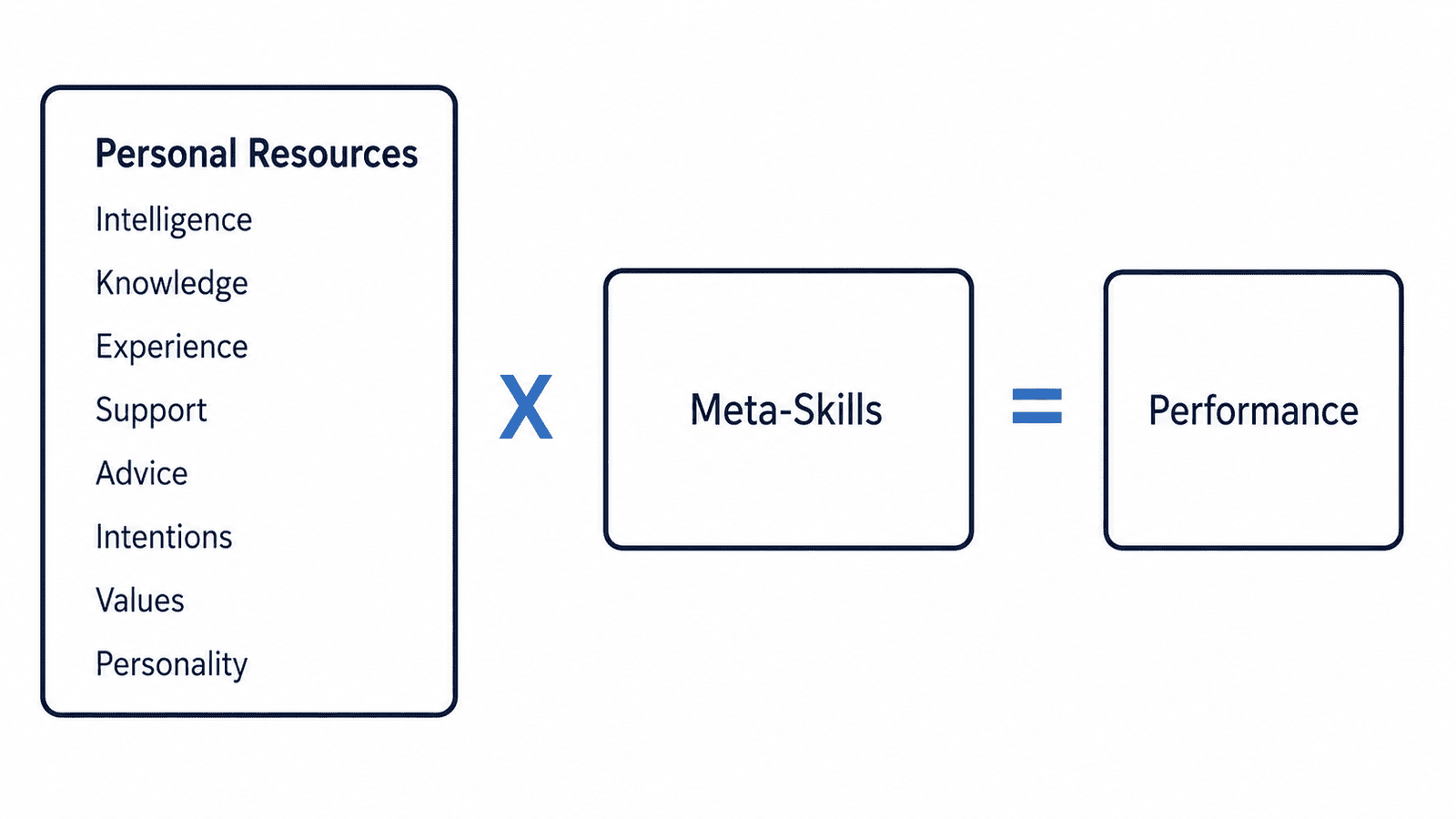
As your underlying Meta-Skills strengthen, confidence improves — not because the situations become simple, but because you become more capable of responding to them with steadiness, perspective, and discipline.
Format: 12 team sessions, organized in a repeating rhythm: two weekly team sessions followed by one week of individual coaching, where each team member participates in a 1:1 session providing an opportunity to apply the work to their specific role, challenges, and development goals.
The focus remains on real situations, not theory.
But in a cohort format, you are not only learning from your own experience. You are also seeing how other thoughtful people interpret, navigate, and respond to similar challenges.
As you listen to how others think through situations, where they get stuck, what they notice, and how they respond under pressure, your own perspective begins to expand.
You start to recognize patterns that are harder to see when you are focused only on your own situation.
Groups are intentionally kept small — with enough diversity of experience to broaden perspective, while still allowing space for honest, in-depth conversation.
Over time, something important happens. You begin to realize that many of the challenges you are facing are not unique to you. That recognition matters. It reduces some of the pressure people carry, creates greater clarity, and makes it easier to think well in difficult moments.
As your underlying Meta-Skills strengthen, confidence improves — not because the situations become simple, but because you become more capable of responding to them with steadiness, perspective, and discipline.
One-to-One Coaching
Format: 12 session program, weekly or bi-weekly sessions.
One-to-one coaching creates space to focus directly on your specific challenges. Most of the work centers on real situations — decisions, conversations, pressures, and moments that may not have gone as expected.
We slow those moments down and look carefully at what was shaping them:
how you interpreted the situation
what was happening internally
how that influenced your communication and decision-making
At what point things began to shift
Over time, this helps you see more clearly what is actually driving your effectiveness.
Because the work is private and confidential, it also creates room to explore areas that may feel more uncertain, sensitive, or uncomfortable as you grow into your role.
As your underlying Meta-Skills strengthen, confidence improves — not because the situations become simple, but because you become more capable of responding to them with steadiness, perspective, and discipline.